Menu
Menu





How Many People Worldwide Live With Mental Disorders and Why Access to Care Is So Uneven?
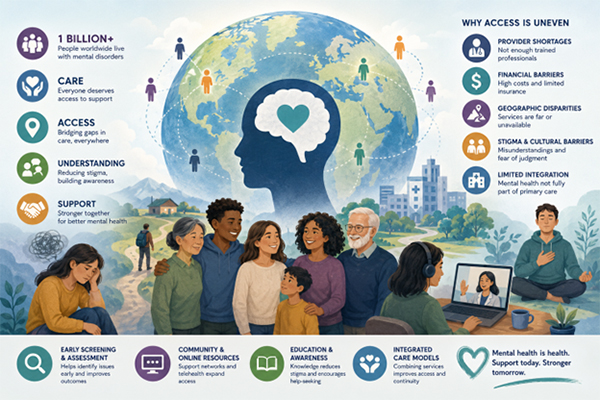
Mental disorders affect a staggering number of people across the globe. According to the World Health Organization (WHO), more than 1 billion people worldwide are currently living with a mental health condition. These conditions range from anxiety and depression to bipolar disorder, schizophrenia, and neurodevelopmental disorders such as ADHD and autism. While this figure underscores the scale of the challenge, it also highlights the gaps in access to treatment and support for millions of individuals.
What Does This Mean?
Despite the high prevalence, most people with mental disorders do not receive the care they need. Globally, treatment gaps are substantial, with many individuals—particularly in low- and middle-income countries—receiving little to no professional support. This lack of access can result in prolonged symptoms, decreased quality of life, and additional social and economic burdens.
Common Factors Contributing to Uneven Access
1. Provider Shortages
Many countries have insufficient numbers of trained mental health professionals, including psychiatrists, psychologists, and therapists.
2. Financial Barriers
High out-of-pocket costs and limited insurance coverage prevent many people from seeking care.
3. Geographic Disparities
Rural and remote areas often lack accessible services, forcing individuals to travel long distances.
4. Stigma and Cultural Barriers
Fear of judgment or cultural misconceptions about mental health can discourage help-seeking.
5. Limited Integration Into Primary Care
In many regions, mental health services are not integrated into general health care systems, making it harder for people to receive timely support.
Why This Happens
Several factors contribute to this uneven access:
- Underfunded Mental Health Systems
Most countries spend only a small fraction of their health budgets on mental health care. - High Demand, Low Supply
The growing prevalence of conditions like depression and anxiety outpaces the availability of trained providers. - Lack of Awareness
Many individuals and families may not recognize early symptoms or know how to access services.
How This Affects Daily Life
Limited access to care can result in:
- Prolonged or worsening symptoms
- Decreased ability to work or study
- Social isolation or strained relationships
- Increased stress for families and caregivers
When to Seek Help From a Specialist
Professional support is recommended if:
- Symptoms persist and interfere with daily life
- Emotional or behavioral changes are noticeable
- Stress, anxiety, or depression affect school, work, or relationships
Strategies and Support Options
- Early Screening and Assessment
Regular check-ins with healthcare providers help identify issues early. - Community and Online Resources
Support networks and telehealth services can expand access. - Education and Awareness
Understanding mental health conditions reduces stigma and encourages help-seeking. - Integrated Care Models
Combining mental health services with primary care improves accessibility and continuity.
With proper recognition and support, individuals with mental disorders can achieve better functioning, well-being, and participation in daily life.
About Dr. Priti Kothari
Dr. Priti Kothari is a board-certified child, adolescent, and adult psychiatrist in Boca Raton. She specializes in ADHD, autism, anxiety, depression, PTSD, and related conditions. Dr. Kothari helps individuals and families access appropriate care and interventions to improve quality of life and daily functioning.
Frequently Asked Questions
How many people worldwide live with mental disorders?
Over 1 billion people, according to WHO estimates.
Why is access to care so uneven?
Factors include provider shortages, financial barriers, stigma, and system-level gaps.
Can early support make a difference?
Yes, early intervention improves outcomes and reduces long-term disability.
What can families do if local resources are limited?
Consider telehealth, community programs, and advocacy for school or local support services.
References

Dr.Kothari is amazing! She has been my doctor for years...
I have been a patient of Dr. Kothari for over three years. She has invested her heart...
Dr. Kothari has been seeing my sons for seven years. She is a wonderful resource...
Dr. Kothari is very caring. Appointments and waiting times are great...
When we started seeing Dr. Kothari, my son was dealing with a great...
Dr. Kothari has saved my life, this I can say without reservation...
 Patient Forms
 Videos
 Location