Menu
Menu





Digital Detox for ADHD: Minimizing Distractions to Boost Focus
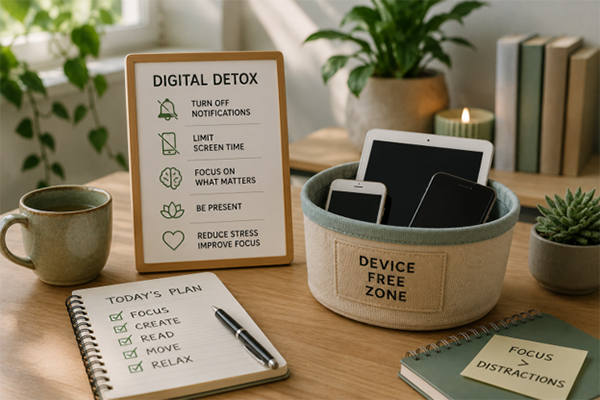
Adults with ADHD often struggle with sustaining attention, managing multiple responsibilities, and completing tasks efficiently. One key contributor to these challenges is constant digital stimulation from smartphones, social media, email, and notifications. A digital detox—intentionally reducing exposure to digital distractions—can help improve focus, executive functioning, and overall productivity.
What Does This Mean?
ADHD impacts the brain’s executive functions, including attention regulation, working memory, and task initiation. Frequent digital interruptions can exacerbate these difficulties, making it hard to maintain mental clarity and consistent task completion. By creating structured periods without digital stimuli, individuals can reduce cognitive overload and improve their ability to engage in focused work.
Common Strategies for Digital Detox
1. Scheduled Screen-Free Periods
Designate specific blocks of time each day to avoid screens, particularly during tasks requiring deep concentration.
2. Notification Management
Disable non-essential notifications, mute group chats, and limit alerts to important communications only.
3. Dedicated Workspaces
Create environments free from digital devices not related to the task at hand. This helps reinforce focus cues for the brain.
4. Use of Time-Limiting Apps
Employ apps that restrict social media usage or track screen time to encourage mindful engagement.
5. Batching Digital Tasks
Consolidate email checks, messages, and online tasks into specific windows rather than responding continuously throughout the day.
6. Analog Alternatives
Use paper planners, physical to-do lists, or journals to reduce dependence on digital tools for task management.
7. Mindful Breaks
Take brief, intentional breaks for movement or relaxation without engaging with devices to reset focus.
How This Affects Daily Life
Implementing a digital detox can lead to:
- Improved attention and concentration during work or study
- Greater efficiency in completing tasks
- Reduced mental fatigue from constant stimulation
- Increased awareness of priorities and time management
Strategies and Support Options
- ADHD Coaching Support: Coaches can help design personalized detox plans, accountability structures, and environmental adjustments.
- Collaborative Planning: Coordinate detox periods with household members or colleagues to maintain consistency.
- Integration with Mindfulness: Pairing digital breaks with mindfulness exercises can enhance emotional regulation and stress reduction.
In Conclusion
A digital detox is a practical tool for adults with ADHD to reduce distractions and enhance executive function. By setting intentional boundaries with technology, individuals can reclaim focus, improve productivity, and experience less cognitive overload.
About Dr. Priti Kothari
Dr. Priti Kothari is a board-certified child, adolescent, and adult psychiatrist in Boca Raton. She specializes in ADHD, executive function challenges, anxiety, and stress-related disorders, helping patients implement practical strategies to improve daily functioning and quality of life.
Frequently Asked Questions
Can brief digital breaks really improve focus?
Yes, even short, structured periods without digital distractions can strengthen attention and task engagement.
Should digital detox replace other ADHD strategies?
No, it is most effective when combined with coaching, organizational systems, and behavioral strategies.
How often should I implement a digital detox?
Daily or weekly routines, adjusted for personal lifestyle and work demands, are most effective.
References

Dr.Kothari is amazing! She has been my doctor for years...
I have been a patient of Dr. Kothari for over three years. She has invested her heart...
Dr. Kothari has been seeing my sons for seven years. She is a wonderful resource...
Dr. Kothari is very caring. Appointments and waiting times are great...
When we started seeing Dr. Kothari, my son was dealing with a great...
Dr. Kothari has saved my life, this I can say without reservation...
 Patient Forms
 Videos
 Location