Menu
Menu





Sports and ADHD: How Tennis, Golf, and Swimming Can Strengthen Focus and Self-Control
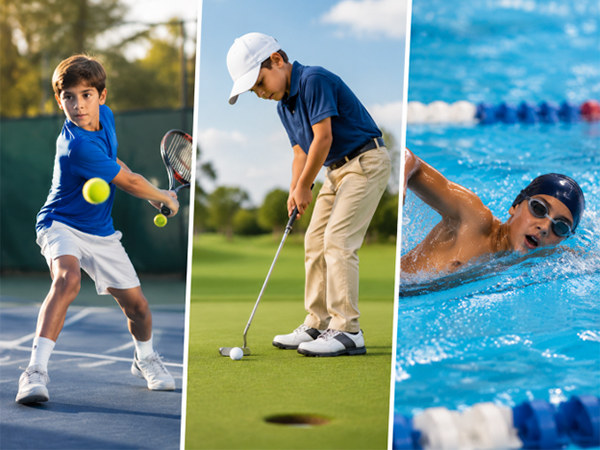
Children with ADHD often experience challenges related to attention, impulse control, organization, and emotional regulation. While treatment approaches may include behavioral strategies, school support, therapy, and medication when appropriate, structured activities can also provide valuable opportunities for children to practice important skills. Sports such as tennis, golf, and swimming offer environments where children can develop focus, patience, self-control, and confidence through consistent practice and goal-oriented learning.
Physical activity plays an important role in overall brain health and development. Exercise supports areas of the brain involved in attention, planning, emotional regulation, and decision-making. For children with ADHD, participating in structured sports may provide opportunities to strengthen executive functioning skills by requiring them to follow instructions, manage emotions, adapt to changing situations, and stay engaged with a task.
Sports that require focus and strategy can be especially beneficial because they encourage children to slow down, think ahead, and make decisions. Unlike activities that rely only on physical movement, sports such as tennis, golf, and swimming require a combination of mental focus, body awareness, and self-monitoring. These skills overlap with many executive functioning abilities that children with ADHD continue to develop.
Tennis requires continuous attention, quick decision-making, and the ability to adjust strategies during play. Players must watch the ball, anticipate movement, control their reactions, and plan their next action. For children with ADHD, practicing these skills in a structured setting may help strengthen sustained attention, flexible thinking, and the ability to respond rather than react impulsively.
Golf provides a different type of challenge by emphasizing patience, concentration, and self-regulation. Players must manage their emotions, focus on technique, and carefully plan each shot. The slower pace of golf allows children to practice waiting, controlling frustration, and maintaining attention over time. These experiences can help reinforce skills related to emotional regulation and thoughtful decision-making.
Swimming combines physical endurance with routine and repetition. Swimmers follow structured practices, remember sequences of movements, and work toward personal goals. The repetitive nature of swimming can help children develop consistency, body awareness, and confidence while providing an outlet for physical energy. The individual nature of the sport also allows children to focus on personal progress rather than comparison with others.
Beyond physical benefits, sports can support important social and emotional skills. Participating in team environments, lessons, or training programs can help children practice communication, cooperation, handling mistakes, and accepting feedback. Learning how to recover after challenges is an important part of building resilience.
The benefits of sports are influenced by the child’s individual interests and experiences. Not every child with ADHD will enjoy the same activity, and forcing participation may create additional frustration. Choosing activities that match a child’s strengths and interests can increase motivation and encourage long-term engagement. A supportive coach or instructor who understands different learning styles can also make a significant difference.
It is important to view sports as one part of a broader ADHD support plan. Physical activity can complement evidence-based treatments and strategies but should not be considered a replacement for professional evaluation or recommended treatment. Each child’s needs are unique, and decisions about ADHD care should involve qualified healthcare providers, families, and educators.
Creating opportunities for children to explore structured activities can help them discover strengths beyond academics. Success in sports, music, arts, or other hobbies can improve confidence and provide positive experiences where children recognize their abilities.
In conclusion, sports such as tennis, golf, and swimming can provide valuable opportunities for children with ADHD to practice focus, self-control, planning, and emotional regulation. Through consistent routines, skill development, and supportive environments, structured activities can help children strengthen executive functioning skills while building confidence and resilience. When combined with appropriate ADHD support strategies, these experiences can contribute to healthy development and overall well-being.

Dr.Kothari is amazing! She has been my doctor for years...
I have been a patient of Dr. Kothari for over three years. She has invested her heart...
Dr. Kothari has been seeing my sons for seven years. She is a wonderful resource...
Dr. Kothari is very caring. Appointments and waiting times are great...
When we started seeing Dr. Kothari, my son was dealing with a great...
Dr. Kothari has saved my life, this I can say without reservation...
 Patient Forms
 Videos
 Location