Menu
Menu





Emotional Regulation in Children with ADHD: Building Skills to Manage Big Feelings
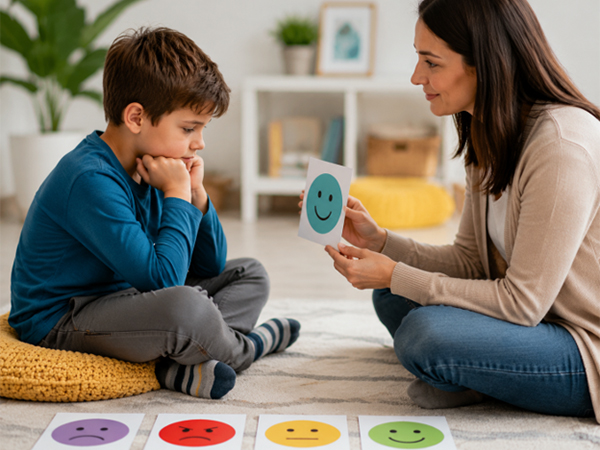
Children with ADHD often experience challenges related to attention, impulse control, organization, and emotional regulation. While ADHD is commonly associated with difficulty staying focused or managing impulses, many children also experience intense emotional responses, frustration, or difficulty calming down after stressful situations. Learning emotional regulation skills can help children better understand their feelings, manage reactions, and navigate everyday challenges with greater confidence.
Emotional regulation refers to the ability to recognize, understand, and manage emotions in healthy ways. It does not mean avoiding strong emotions or never feeling upset. Instead, it involves developing skills to pause, identify feelings, and choose appropriate responses. For children with ADHD, these skills may take more time and practice to develop because differences in brain development can affect impulse control, flexibility, and the ability to shift attention.
The brain areas involved in emotional regulation continue to mature throughout childhood and adolescence. Children with ADHD may have more difficulty slowing down reactions, considering consequences, or recovering from frustration. A child who becomes overwhelmed by a small challenge may not be intentionally misbehaving; they may need additional support learning how to recognize and manage their emotional responses.
Understanding emotional triggers is an important part of building regulation skills. Children may become upset during transitions, difficult tasks, conflicts with peers, changes in routine, or situations where they feel unsuccessful. Identifying patterns can help parents and educators create supportive strategies before emotions become overwhelming.
Teaching children to identify emotions can help them develop greater self-awareness. Simple practices such as naming feelings, using emotion charts, or discussing body signals associated with emotions can help children recognize when they are becoming frustrated, anxious, or overwhelmed. Understanding emotions gives children a foundation for learning how to respond differently.
Healthy coping strategies can also support emotional regulation. Depending on the child’s age and needs, strategies may include taking a short break, practicing deep breathing, using movement to release energy, asking for help, or using calming activities. The goal is to help children develop tools they can use when emotions feel difficult to manage.
Consistent routines and clear expectations can make emotional regulation easier for children with ADHD. Predictable schedules help children understand what to expect and reduce stress caused by unexpected changes. Providing advance notice before transitions, breaking tasks into smaller steps, and offering clear instructions can help children feel more prepared and in control.
Positive reinforcement plays an important role in skill development. Recognizing moments when children successfully manage emotions, communicate their needs, or recover from frustration helps reinforce progress. Focusing on effort and improvement rather than perfection encourages children to continue practicing new skills.
Social environments also influence emotional development. Children learn emotional regulation through interactions with parents, teachers, caregivers, and peers. Supportive adults can model calm problem-solving, validate emotions, and teach children that mistakes and challenges are opportunities to learn.
Parents and caregivers can support emotional growth by responding with understanding while maintaining appropriate boundaries. Acknowledging a child’s feelings does not mean accepting harmful behaviors. Helping children understand emotions while teaching appropriate responses creates a balance between empathy and skill-building.
Emotional regulation support should be individualized for each child. Some children may benefit from behavioral therapy, parent training, school accommodations, or other evidence-based ADHD interventions. When medication is recommended by a qualified healthcare provider, it may also support attention and impulse control, which can make it easier for some children to practice emotional regulation skills.
Building emotional regulation takes time and repetition. Children with ADHD are not expected to master these skills immediately. With consistent support, encouragement, and opportunities to practice, children can develop stronger awareness of their emotions and learn healthier ways to respond to challenges.
In conclusion, emotional regulation is an important skill for children with ADHD and plays a significant role in relationships, learning, and daily functioning. By helping children recognize emotions, practice coping strategies, and develop self-control, parents and educators can support healthier emotional development. With appropriate guidance and evidence-based ADHD support, children can build confidence and learn that strong emotions can be managed in positive ways.

Dr.Kothari is amazing! She has been my doctor for years...
I have been a patient of Dr. Kothari for over three years. She has invested her heart...
Dr. Kothari has been seeing my sons for seven years. She is a wonderful resource...
Dr. Kothari is very caring. Appointments and waiting times are great...
When we started seeing Dr. Kothari, my son was dealing with a great...
Dr. Kothari has saved my life, this I can say without reservation...
 Patient Forms
 Videos
 Location