Menu
Menu





The Hidden Role of Self-Compassion in Children: Why Learning Kindness Toward Themselves Matters for Mental Health
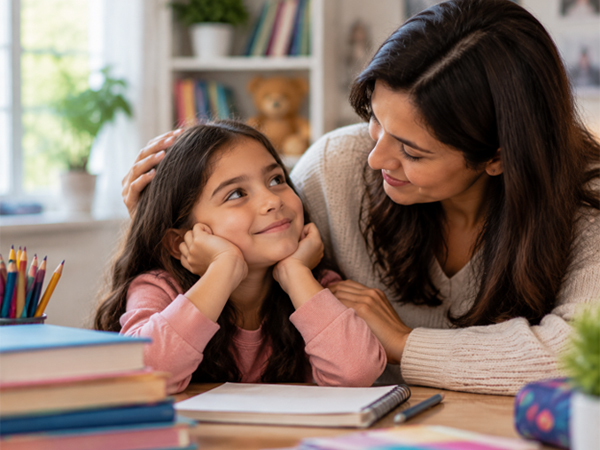
Children are often taught the importance of being kind, respectful, and understanding toward others. However, one important lesson that is sometimes overlooked is learning how to treat themselves with the same kindness. Self-compassion in children means understanding their own feelings, accepting mistakes, and responding to challenges with patience rather than harsh self-criticism. In a world where children may experience academic pressure, social comparisons, and fear of failure, developing self-compassion can become an important part of emotional well-being and healthy childhood development. Research suggests that self-compassion is associated with better emotional coping and psychological well-being among young people.
Why Is Self-Compassion Important for Children’s Mental Health?
Many children naturally become their own toughest critics. A child who struggles with a school assignment, loses a game, or makes a mistake may begin to think, “I am not good enough” instead of recognizing that mistakes are part of learning. Self-compassion helps children develop a healthier inner voice by teaching them to acknowledge difficulties while maintaining confidence and hope. It does not mean lowering expectations or avoiding responsibility; rather, it encourages children to learn from experiences without excessive shame or self-blame. Studies have linked higher self-compassion in adolescents with lower levels of anxiety, depression, and stress.
How Can Parents Encourage Self-Compassion in Children?
Parents play an important role in helping children build a kinder relationship with themselves. Simple everyday moments can make a difference, such as acknowledging a child’s feelings, praising effort instead of only outcomes, and modeling self-compassion in their own lives. When parents respond to mistakes with patience and understanding, children learn that challenges do not define their worth. Encouraging phrases such as “Everyone makes mistakes while learning” or “Let’s think about what we can try differently next time” can help children develop resilience and emotional flexibility.
Supporting self-compassion is not about protecting children from every disappointment. It is about giving them the emotional tools to face challenges with confidence, patience, and self-understanding. By helping children learn kindness toward themselves, families can support stronger emotional regulation, healthier coping skills, and long-term mental health.
Reference:
- Bluth K, Neff KD. Self-Compassion: A Potential Path to Adolescent Resilience and Positive Mental Health.
https://pmc.ncbi.nlm.nih.gov/articles/PMC8168452/ - Neuenschwander R, et al. Self-compassion in children and adolescents: A review of developmental research.
https://link.springer.com/article/10.1007/s12144-024-07053-7 - Harvard Center on the Developing Child. Executive Function & Self-Regulation.
https://developingchild.harvard.edu/science/key-concepts/executive-function/

Dr.Kothari is amazing! She has been my doctor for years...
I have been a patient of Dr. Kothari for over three years. She has invested her heart...
Dr. Kothari has been seeing my sons for seven years. She is a wonderful resource...
Dr. Kothari is very caring. Appointments and waiting times are great...
When we started seeing Dr. Kothari, my son was dealing with a great...
Dr. Kothari has saved my life, this I can say without reservation...
 Patient Forms
 Videos
 Location