Menu






ADHD in Children: Balancing Discipline with Empathy for Better Behavior and Emotional Growth
When a child with attention-deficit/hyperactivity disorder (ADHD) interrupts, forgets instructions, or struggles to finish a task, adults may see defiance. Yet these behaviors can reflect difficulty with attention, impulse control, planning, or emotional regulation. Empathy does not mean abandoning boundaries; it means teaching skills without shame.
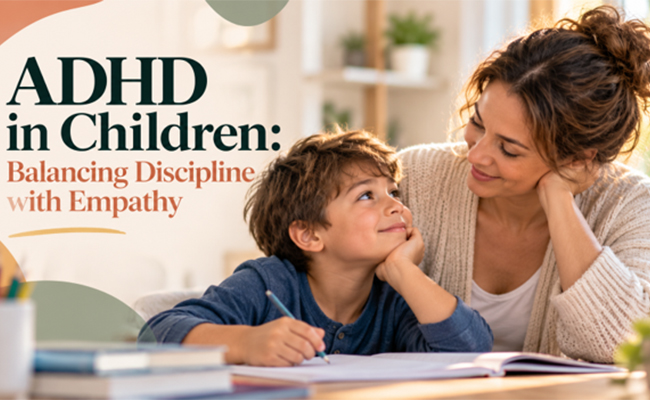
Understand Before You Respond
ADHD can make it harder for children to pause, organize steps, manage frustration, and follow through consistently. A child may understand a rule but struggle to apply it in the moment. Persistent concerns deserve professional assessment.
Discipline That Teaches
The American Psychological Association describes effective discipline as teaching children what to do, rather than simply making them feel bad. Clear expectations, predictable routines, and calm, consistent consequences help children learn. Humiliation or harsh punishment can intensify distress without building the skills a child needs.
Try these strategies:
- Give one instruction at a time. Use brief, specific language and ask your child to repeat the next step.
- Notice effort. Praise observable behaviors, such as starting homework or waiting to speak.
- Make routines visible. Checklists, timers, and reminders can support organization and memory.
- Plan for difficult moments. Offer a movement break, quiet reset, or limited choices before frustration escalates.
- Follow through calmly. Keep consequences proportionate, related to the behavior, and consistent.
Partner With Your Child
Instead of asking, “Why won’t you listen?” try, “What made that hard, and what could help next time?” This shifts the conversation from blame to problem-solving while preserving accountability. Coordinate with teachers and healthcare professionals so expectations and supports are realistic at home and school.
Parent training in behavior-management strategies can help families of children with ADHD. This can strengthen everyday family relationships. Depending on individual needs, a clinician may also discuss school accommodations, therapy, or medication as part of a personalized treatment plan.
Empathy Builds Skills
Dr. Priti Kothari, a board-certified child, adolescent, and adult psychiatrist, emphasizes comprehensive, individualized care. A child’s behavior is information—not a measure of their character or potential. When adults combine warmth with structure, children can feel supported as they practice new skills.
If behavioral difficulties persist or significantly affect daily life, consult a qualified professional. This article is educational and does not replace personalized medical advice.

Dr.Kothari is amazing! She has been my doctor for years...
I have been a patient of Dr. Kothari for over three years. She has invested her heart...
Dr. Kothari has been seeing my sons for seven years. She is a wonderful resource...
Dr. Kothari is very caring. Appointments and waiting times are great...
When we started seeing Dr. Kothari, my son was dealing with a great...
Dr. Kothari has saved my life, this I can say without reservation...
 Patient Forms
 Videos
 Location