Menu






ADHD in Children: Recognizing the Signs and Finding Support
Every child has moments of distraction, restlessness, or impulsivity. When these behaviors persist, occur in multiple settings, and interfere with learning, relationships, or daily life, attention-deficit/hyperactivity disorder (ADHD) may be worth exploring. A thoughtful evaluation can help families understand a child’s needs without defining the child by a diagnosis.
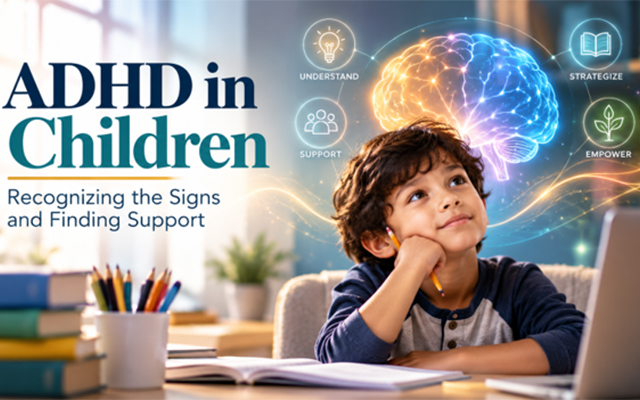
What Does ADHD Look Like?
ADHD is a neurodevelopmental condition associated with inattention, hyperactivity, and impulsivity. Some children struggle to follow instructions, organize tasks, or remember details. Others seem constantly in motion, interrupt conversations, or act before considering consequences. Some experience a combination of these patterns.
Occasional difficulty concentrating does not automatically mean ADHD. Clinicians consider symptom duration, whether behaviors are developmentally unusual, whether they appear in more than one setting, and how significantly they affect functioning. Sleep difficulties, anxiety, and learning differences can resemble or accompany ADHD, so comprehensive assessment matters.
Why Professional Evaluation Matters
A qualified healthcare professional gathers information from caregivers, teachers, and the child when appropriate. Evaluation may include developmental and medical history, rating scales, and assessment for coexisting conditions.
Dr. Priti Kothari, a board-certified child, adolescent, and adult psychiatrist, takes a comprehensive approach to psychiatric evaluation and individualized care. Families concerned about attention, behavior, or school difficulties can seek professional guidance to understand what may be contributing to a child’s challenges.
Building a Supportive Plan
Effective ADHD care is individualized. Depending on age and needs, support may include parent training, classroom strategies, school accommodations, behavioral interventions, and medication when clinically appropriate. Regular follow-up helps assess progress, monitor side effects, and adjust the plan over time.
At home, predictable routines, clear instructions, manageable tasks, positive reinforcement, sufficient sleep, and collaboration with teachers can make expectations easier to navigate. These strategies reinforce a child’s strengths but do not replace professional assessment.
A Hopeful Next Step
ADHD is not a measure of intelligence, character, or potential. With understanding and appropriate support, children can develop skills, confidence, and meaningful connections. If concerns persist, speak with a healthcare professional and explore guidance from the American Psychological Association at apa.org.
Learn more about Dr. Priti Kothari and psychiatric services at www.drpritikothari.com.

Dr.Kothari is amazing! She has been my doctor for years...
I have been a patient of Dr. Kothari for over three years. She has invested her heart...
Dr. Kothari has been seeing my sons for seven years. She is a wonderful resource...
Dr. Kothari is very caring. Appointments and waiting times are great...
When we started seeing Dr. Kothari, my son was dealing with a great...
Dr. Kothari has saved my life, this I can say without reservation...
 Patient Forms
 Videos
 Location