Menu






ADHD in Kids: Unlocking Potential Through Understanding, Support, and Compassion
Understanding ADHD Beyond “Being Distracted”
Attention-deficit/hyperactivity disorder (ADHD) can shape how a child focuses, manages impulses, organizes tasks, and responds to emotions. A child may forget instructions, interrupt conversations, struggle to finish homework, or seem constantly restless. These behaviors are not necessarily signs of laziness or poor discipline. ADHD symptoms can affect learning, friendships, routines, and confidence, and they may look different from one child to another. Recognizing persistent patterns across home, school, and social settings is an important step toward understanding what a child needs. A professional assessment can help distinguish ADHD from other concerns that may affect attention or behavior.
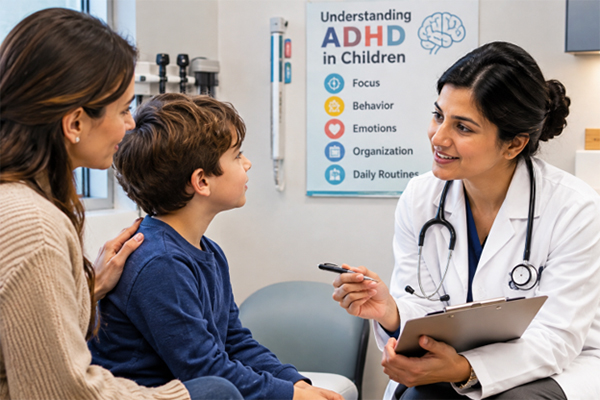
Symptoms that deserve attention are frequent, lasting difficulties rather than occasional forgetfulness or high energy. Clinicians consider developmental history, behavior across settings, and how challenges interfere with daily life; no single checklist or observation is enough. Parents need not wait for grades to decline before asking questions. Seeking help is not about labeling or lowering expectations, it is about finding tools that fit a child’s strengths, needs, and stage of development, while keeping dignity and belonging at the center and in everyday family life.
Helping Children Thrive With Understanding and Structure
Support begins with curiosity, patience, and practical strategies. Parents can make routines easier by giving brief, clear directions, breaking tasks into manageable steps, using checklists, and offering reminders. Praise specific efforts, not only outcomes, to reinforce progress and build motivation. Movement breaks, predictable expectations, and calm responses during difficult moments can also help children reset without feeling shamed. Teachers and caregivers can work together to create consistent approaches and identify school supports when needed. Treatment is individualized and may include behavioral strategies, parent guidance, therapy, school accommodations, and medication when clinically appropriate.
Dr. Priti Kothari emphasizes thoughtful, personalized psychiatric care for children, adolescents, and adults. Families seeking guidance about ADHD can learn more about evaluation and support through Dr. Kothari’s website. With informed care and encouragement, children can strengthen skills recognize their abilities. The goal is not to make every child behave identically, but to help each child flourish with the support they deserve.

Dr.Kothari is amazing! She has been my doctor for years...
I have been a patient of Dr. Kothari for over three years. She has invested her heart...
Dr. Kothari has been seeing my sons for seven years. She is a wonderful resource...
Dr. Kothari is very caring. Appointments and waiting times are great...
When we started seeing Dr. Kothari, my son was dealing with a great...
Dr. Kothari has saved my life, this I can say without reservation...
 Patient Forms
 Videos
 Location