Menu
Menu





AI as Emotional Support
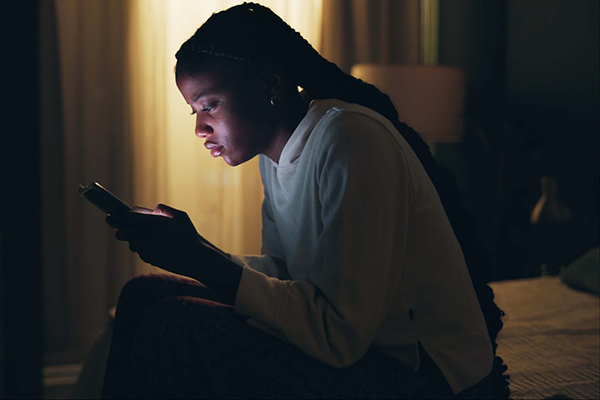
We are living in a world where everything feels urgent. There is always something happening, always something to respond to, and always another expectation to meet. We are told to be independent, driven, and impactful. We want autonomy. We want to work hard and make ourselves and others proud. But at the same time, many of us are quietly carrying a constant sense of pressure that never really turns off.
This tension, between wanting to do everything and feeling like we are falling behind, is what often leads to burnout. Not just physical exhaustion, but emotional depletion. The kind where you feel disconnected, overwhelmed, and unsure of how to reset.
In response, many people are turning to AI as a form of emotional support instead of seeking professional help. On the surface, this makes sense. AI is always available. It responds instantly. It does not judge. It is accessible in a way that therapy is not. You do not need to go through insurance or pay a service fee. When someone does not have the time, resources, or energy to seek out human support, it can feel like a simple fix.
But as humans, we need human connection.
Even if AI can mimic empathy, it cannot sit with you in your silence. It cannot pick up on the subtle shifts in your tone or body language. It cannot challenge you in the nuanced and relational way that real growth often requires. Most importantly, it cannot offer what we fundamentally need, which is genuine human connection. As highlighted in recent discussions about AI and mental health, AI may simulate understanding, but it lacks true emotional awareness and accountability, raising concerns about its reliability as a substitute for therapy.
Research on happiness and well-being strongly supports this idea. In The Good Life, Waldinger and Schulz (2023) draw on one of the longest-running studies of adult development to show that the quality of our relationships is one of the strongest predictors of both happiness and health. Through decades of data, the study consistently found that people who felt more connected to others lived longer, healthier, and more fulfilling lives (Waldinger & Schulz, 2023). In contrast, loneliness and social isolation were associated with poorer mental and physical health outcomes (Waldinger & Schulz, 2023).
This research reinforces a simple but powerful truth. A good life is not built on achievement alone, but on connection.
When we rely too heavily on AI for emotional support, we risk reinforcing the very isolation that contributes to burnout in the first place. It becomes a cycle. We are overwhelmed, so we turn to something convenient. But that convenience can quietly distance us from the deeper connections that actually help us feel grounded and supported. As recent concerns about AI-based emotional support suggest, relying on AI too heavily may unintentionally normalize a lower standard of care, where efficiency replaces genuine human presence.
This is not to say that AI is not a helpful resource. It can support reflection, help organize thoughts, and even offer coping strategies. In many ways, it can be a useful starting point. But it is not a replacement for human relationships or professional mental health support.
Because at the end of the day, healing is relational.
In a world that constantly pushes us to do more, be more, and move faster, perhaps the most important thing we can do is slow down and invest in our relationships. Not because it is easy, but because it is essential.
References:
The New York Times. (2026, March 29). Your Chatbot Isn’t a Therapist.
Waldinger, R. J., & Schulz, M. S. (2023). The good life: Lessons from the world’s longest scientific study of happiness. Simon & Schuster.

Dr.Kothari is amazing! She has been my doctor for years...
I have been a patient of Dr. Kothari for over three years. She has invested her heart...
Dr. Kothari has been seeing my sons for seven years. She is a wonderful resource...
Dr. Kothari is very caring. Appointments and waiting times are great...
When we started seeing Dr. Kothari, my son was dealing with a great...
Dr. Kothari has saved my life, this I can say without reservation...
 Patient Forms
 Videos
 Location