Menu






Burnout or Depression? Understanding the Difference Between Emotional Exhaustion and a Mood Disorder
Feeling depleted, disconnected, or unable to keep up can make responsibilities overwhelming. Is it burnout or depression? Understanding the difference can help you recognize when rest, practical changes, or professional care may be needed.
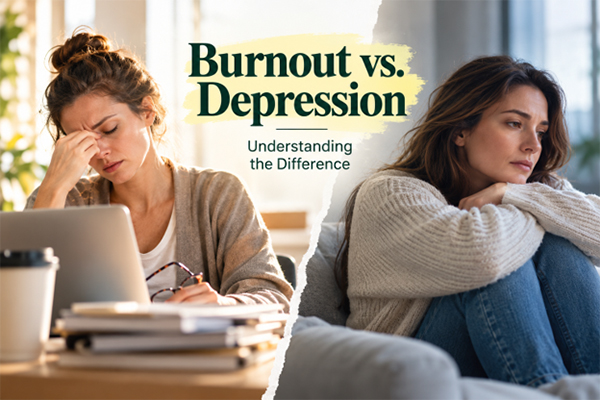
What Burnout Can Look Like
Burnout is associated with prolonged stress, particularly in the workplace. It may involve exhaustion, cynicism toward work, and reduced effectiveness. You might feel drained before the workday begins, struggle to concentrate, or become irritable. Symptoms may ease when demands decrease, boundaries improve, or recovery time becomes possible.
The American Psychological Association describes burnout as an occupational phenomenon rather than a medical diagnosis. Its effects deserve attention.
How Depression Is Different
Depression is a mental health condition that can affect mood, thinking, physical health, relationships, and daily functioning. It is not necessarily caused by work stress. Signs may include persistent sadness or emptiness, loss of interest or pleasure, changes in sleep or appetite, fatigue, difficulty concentrating, worthlessness, or hopelessness.
Unlike work-related burnout, depression may remain present during weekends, vacations, and activities once enjoyed. Some people experience both conditions, so the distinction is not always straightforward.
Why a Careful Evaluation Matters
No checklist can determine a diagnosis. Duration, severity, personal history, medical factors, stressors, and effects on life all matter. A mental health professional can assess symptoms, consider overlapping conditions, and discuss an appropriate plan. Treatment may include psychotherapy, medication when indicated, practical changes, or a tailored combination.
When to Reach Out
Seek professional guidance if exhaustion or low mood persists, worsens, affects relationships or responsibilities, or does not improve with rest. If you experience thoughts of suicide or immediate danger, seek urgent help; in the United States, call or text 988.
A Thoughtful Path Forward
Dr. Priti Kothari emphasizes individualized psychiatric care that considers biological, cognitive, behavioral, and psychosocial factors. You do not have to decide whether your experience is “serious enough” before asking for help. A conversation with a mental health professional can bring clarity. Recognizing the difference between burnout and depression is not about labeling yourself; it is about understanding what you need to feel well and supported.

Dr.Kothari is amazing! She has been my doctor for years...
I have been a patient of Dr. Kothari for over three years. She has invested her heart...
Dr. Kothari has been seeing my sons for seven years. She is a wonderful resource...
Dr. Kothari is very caring. Appointments and waiting times are great...
When we started seeing Dr. Kothari, my son was dealing with a great...
Dr. Kothari has saved my life, this I can say without reservation...
 Patient Forms
 Videos
 Location