Menu
Menu





The Importance of Emotional Regulation Skills in Children and Adults: Building Resilience for Everyday Challenges
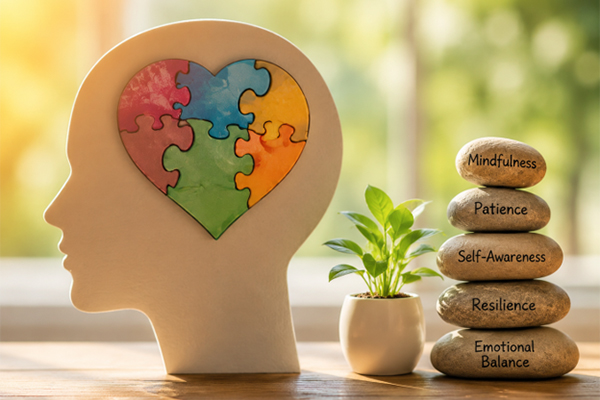
Emotional regulation, the ability to manage and respond to emotions in a healthy and adaptive way, is a fundamental skill that impacts nearly every aspect of daily life. From childhood through adulthood, individuals encounter stressors, unexpected events, and interpersonal conflicts that require the ability to recognize, understand, and modulate emotions effectively. Developing strong emotional regulation skills supports mental health, social relationships, decision-making, and overall resilience.
In children, emotional regulation begins to develop early and is shaped by a combination of biological factors, parenting practices, and environmental experiences. Children who learn to identify their feelings, express emotions appropriately, and cope with frustration are better able to navigate challenges in school, friendships, and family interactions. Conversely, difficulties with emotional regulation in childhood may lead to behavioral issues, anxiety, and social challenges, highlighting the importance of early intervention and support.
For adults, emotional regulation continues to play a critical role in personal, professional, and social functioning. The ability to manage stress, respond thoughtfully rather than impulsively, and maintain perspective during challenging situations supports healthy decision-making, conflict resolution, and work performance. Adults with strong emotional regulation skills are generally better equipped to cope with change, setbacks, and high-pressure environments.
Several key strategies can help enhance emotional regulation across the lifespan. Awareness and mindfulness practices encourage individuals to notice emotional responses without judgment, creating a space to respond thoughtfully rather than react impulsively. Cognitive reframing techniques help reinterpret stressful situations in a way that reduces emotional intensity and promotes problem-solving. Additionally, social support networks, positive coping skills, and structured routines provide external resources that strengthen regulation capacities.
Emotional regulation also intersects with physiological processes. Adequate sleep, regular physical activity, balanced nutrition, and stress-reduction practices such as deep breathing or meditation support the body’s ability to manage emotional arousal. Teaching these skills to children and reinforcing them in adulthood helps create a foundation for long-term well-being.
The benefits of strong emotional regulation extend beyond individual mental health. Individuals who manage emotions effectively tend to have more satisfying relationships, better academic and professional outcomes, and a greater capacity for empathy and cooperation. Organizations and schools that provide support and training in emotional skills foster environments where individuals can thrive and navigate challenges constructively.
In conclusion, emotional regulation is a critical life skill that supports resilience, mental health, and adaptive functioning across the lifespan. By fostering awareness, teaching coping strategies, and encouraging supportive environments, both children and adults can strengthen their ability to navigate daily challenges, respond to stress with balance, and build emotional resilience that lasts a lifetime.

Dr.Kothari is amazing! She has been my doctor for years...
I have been a patient of Dr. Kothari for over three years. She has invested her heart...
Dr. Kothari has been seeing my sons for seven years. She is a wonderful resource...
Dr. Kothari is very caring. Appointments and waiting times are great...
When we started seeing Dr. Kothari, my son was dealing with a great...
Dr. Kothari has saved my life, this I can say without reservation...
 Patient Forms
 Videos
 Location