Menu
Menu





The Prevalence of Mental Health Conditions in the United States and What the Numbers Tell Us
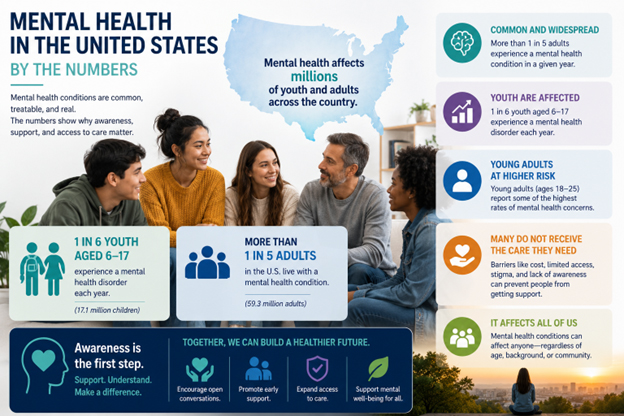
Mental health conditions are among the most common health concerns in the United States. They affect individuals across all age groups, including children, adolescents, and adults. Over the years, growing awareness and increased research have helped provide a clearer understanding of how widespread these conditions are. The numbers not only highlight the prevalence of mental health concerns but also emphasize the importance of access to support, early intervention, and ongoing care.
According to national data, more than one in five adults in the United States live with a mental health condition. This represents tens of millions of individuals each year and reflects the significant role mental health plays in overall well being. Serious mental illnesses, which can substantially affect daily functioning, also impact millions of adults across the country.
Mental health conditions are also common among children and adolescents. National estimates indicate that approximately one in six youth between the ages of 6 and 17 experience a mental health disorder each year. These conditions may affect emotional development, academic performance, behavior, and social interaction. Early identification and support can play an important role in improving outcomes during childhood and adolescence.
Recent data suggest that mental health concerns remain particularly significant among younger populations. Reports have shown elevated levels of sadness, hopelessness, anxiety, and emotional distress among adolescents. While some indicators have shown modest improvement in recent years, mental health challenges continue to affect a substantial portion of youth across the country.
The numbers also reveal important trends among adults. Young adults often report some of the highest rates of mental health concerns compared to other age groups. Anxiety disorders, depressive disorders, and stress related conditions remain among the most commonly reported concerns. These challenges can influence education, employment, relationships, and daily functioning.
At the same time, prevalence rates do not always reflect access to treatment. Many individuals experiencing mental health conditions do not receive professional support. Barriers such as cost, limited access to providers, stigma, and lack of awareness may prevent people from seeking or receiving care. As a result, the actual impact of mental health conditions may extend beyond what prevalence numbers alone suggest.
These statistics also demonstrate that mental health concerns are not limited to a specific group of people. They affect individuals from different backgrounds, communities, and stages of life. Understanding this helps reduce misconceptions and supports a broader view of mental health as a public health priority rather than an isolated issue.
The growing availability of national data has improved awareness and helped guide mental health initiatives. Schools, healthcare systems, workplaces, and community organizations are increasingly recognizing the importance of mental health education and support services. These efforts aim to improve early identification, reduce stigma, and expand access to care.
While the prevalence of mental health conditions remains significant, the numbers also highlight opportunities for improvement. Increased awareness can encourage earlier conversations about mental health and help individuals recognize when support may be needed. Expanding access to services and promoting education about mental health can contribute to better outcomes over time.
In conclusion, mental health conditions affect millions of youth and adults across the United States. The statistics demonstrate both the widespread nature of these concerns and the importance of continued awareness, support, and access to care. Understanding what the numbers tell us can help create more informed discussions and encourage efforts to improve mental health outcomes for individuals and communities alike.

Dr.Kothari is amazing! She has been my doctor for years...
I have been a patient of Dr. Kothari for over three years. She has invested her heart...
Dr. Kothari has been seeing my sons for seven years. She is a wonderful resource...
Dr. Kothari is very caring. Appointments and waiting times are great...
When we started seeing Dr. Kothari, my son was dealing with a great...
Dr. Kothari has saved my life, this I can say without reservation...
 Patient Forms
 Videos
 Location